



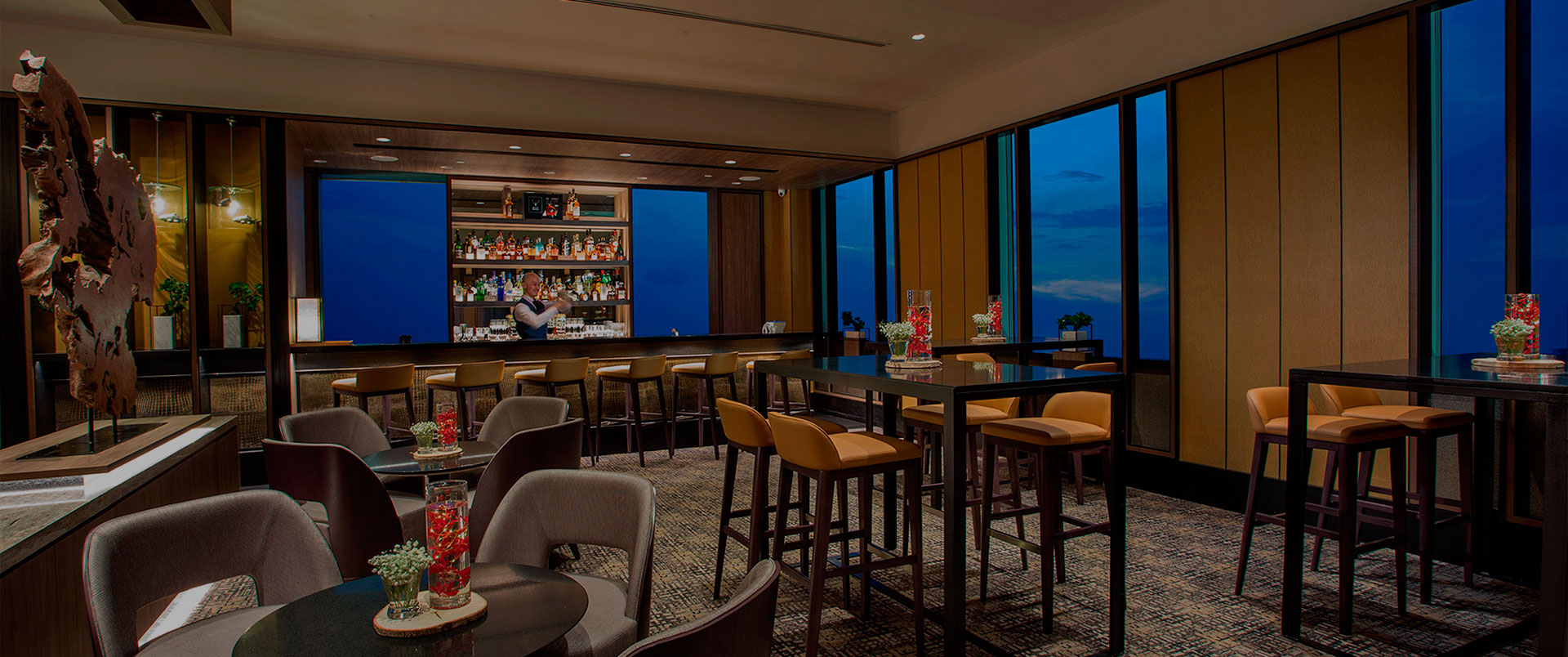
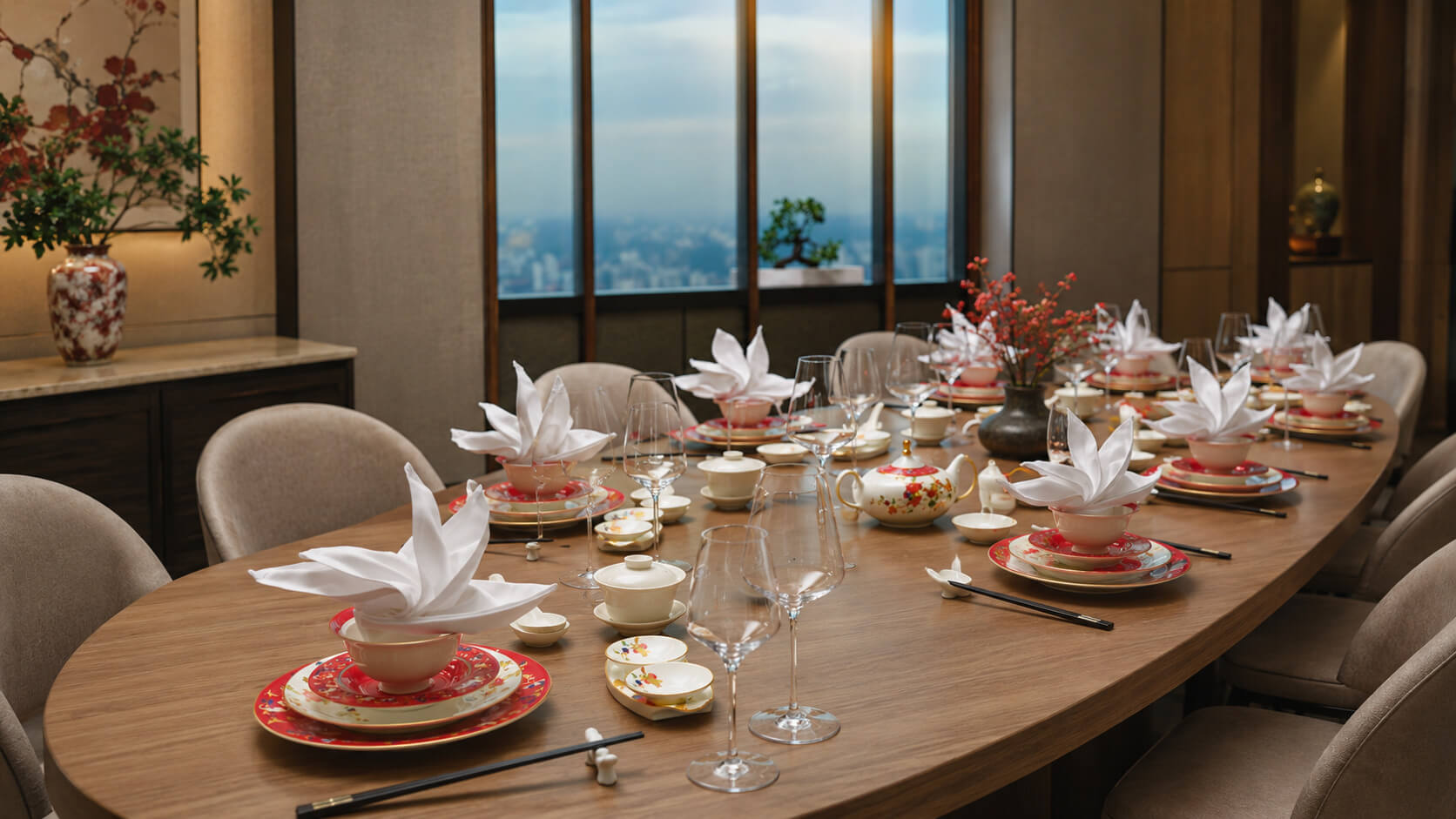
Organising a corporate event at a restaurant comes with a quiet but real pressure of getting it right, impressing the right people, and making the whole thing look effortless.
There is a lot to work on before the day even arrives.
Restaurants are, for good reason, one of the most popular choices for corporate events in Singapore. A single venue handles the food, the atmosphere, and the service, leaving organisers to focus on the people and the programme.
Event spaces can host a crowd, but a restaurant for a corporate event puts the dining experience at the heart of the occasion. Here, the conversation flows more naturally, and the meal itself becomes part of the agenda.
What makes or breaks it is how well the details are coordinated in advance. This guide covers exactly that, step by step.
Why Restaurants Work Well for Corporate Events in Singapore
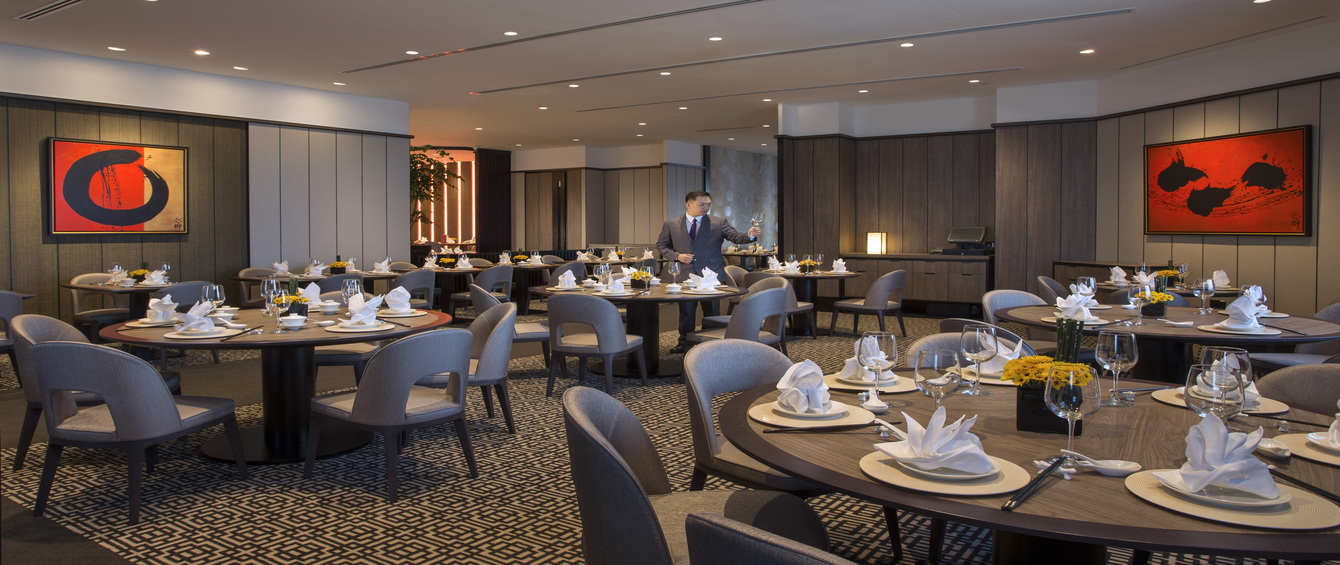
When the goal is to bring people together over a meal, few venues do it better than a well-chosen restaurant.
Food, service, atmosphere, and event space are all managed within one venue, which simplifies planning considerably.
Corporate dining restaurants cater to a range of occasions, from working lunches and client dinners to team celebrations and executive gatherings. For events requiring more focus and discretion, a corporate dining venue with private or dedicated dining spaces offers a more contained and purposeful environment.
Steps to Planning a Corporate Event at a Restaurant
Step 1: Define the Purpose of the Event
Before anything else, be clear on what the event is for and what it needs to achieve. A client dinner calls for a different atmosphere from a team celebration, and an executive gathering has different space and privacy requirements from a casual networking event.
Common corporate occasions include:
- Client dinner
- Business lunch
- Executive gathering
- Networking event
- Team celebration
- Company milestone
- Private corporate function
The purpose of the event shapes everything that follows, such as the type of corporate event restaurant space you need, the level of privacy required, the programme structure, and the overall atmosphere. Getting this right at the start makes every subsequent decision easier.
Step 2: Set the Guest Count and Budget
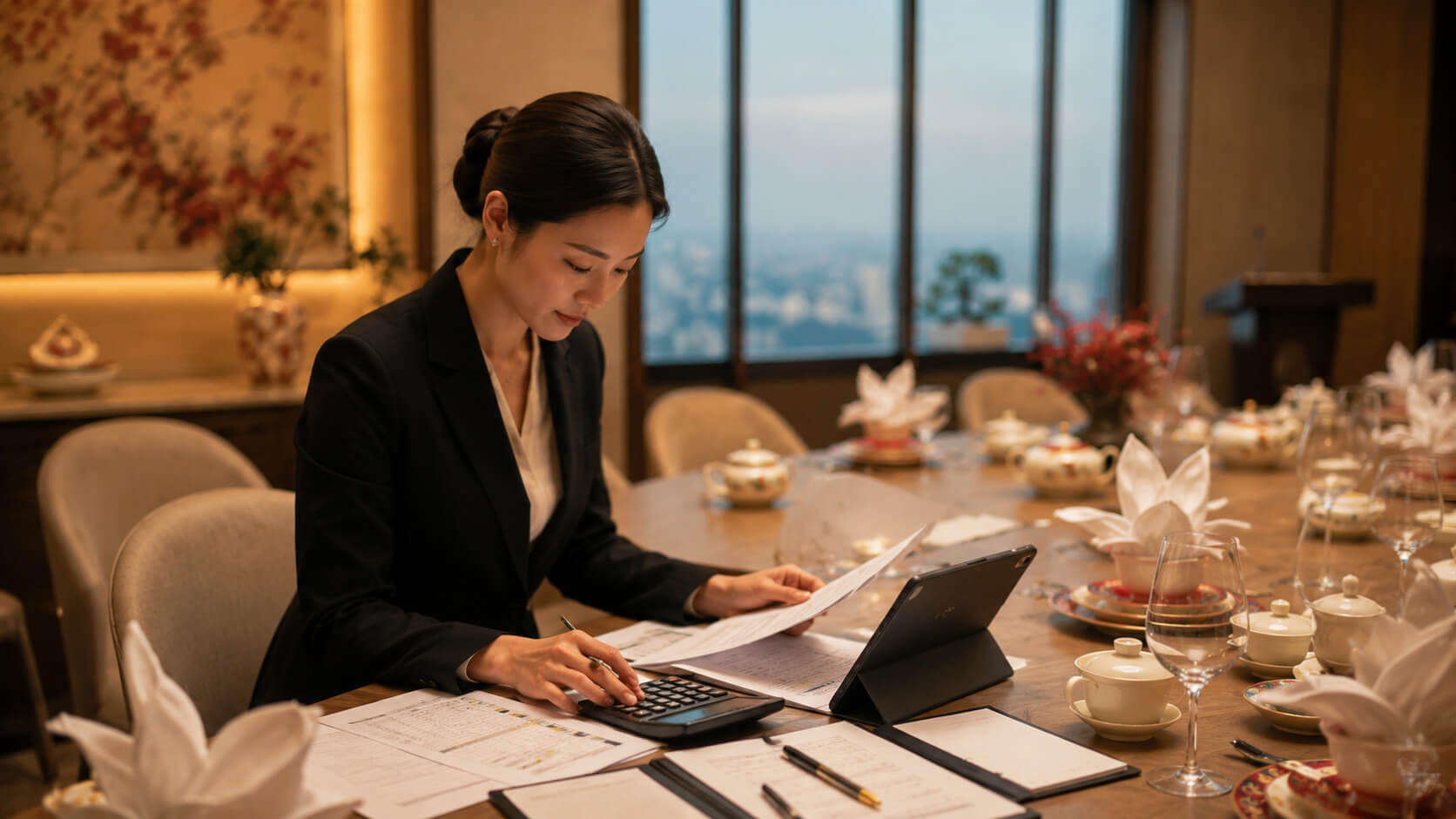
Two details to nail down early: how many people are coming, and how much is available to spend.
Guest numbers directly affect the seating layout, menu options, room choice, and overall cost, so having a firm estimate before approaching a corporate dining venue saves a lot of back-and-forth. Even a rough headcount helps narrow down the right space.
On the budget side, factor in more than just the food.
A realistic figure should cover beverages, private room charges, equipment, and any other event requirements. Before confirming, ask the restaurant about service charges, taxes, minimum spending requirements, and any additional fees that may apply; these can add up and are worth knowing upfront.
Step 3: Choose the Right Corporate Event Restaurant Space
Before confirming a venue, it is worth thinking carefully about the type of space the event actually needs.
Most restaurants offer a range of options. It can be the main dining area, a dedicated section, or a private dining room, each with different capacities and levels of exclusivity.
When evaluating a corporate event restaurant space, consider more than just the table count. Is there enough room for guests to move comfortably? Can the layout accommodate a speaker, a presentation setup, or event materials?
A space that feels right for a dinner of twenty may not work as well for a structured programme with sixty attendees.
Step 4: Decide Whether Private Dining Is Needed
Some corporate events work perfectly well in a shared dining space. Others really do not. If the event involves any of the following, a private or more secluded setting is worth considering:
- Client discussions
- Executive dinners
- Leadership meetings
- Confidential conversations
- Company announcements
- Small corporate celebrations
A private dining Chinese restaurant is particularly well-suited for these occasions, offering a more focused environment away from the noise of a shared dining floor.
Before confirming, ask the restaurant to clarify whether the space is completely private or semi-private. The distinction matters, especially for sensitive discussions or events with a structured programme.
Step 5: Confirm the Location and Guest Accessibility
A great event can still get off to a rocky start if guests have trouble finding the venue or getting there on time. Consider how convenient the restaurant is for everyone attending, especially for any guests who may be less familiar with the area.
Check for MRT access, nearby parking, and taxi or ride-hailing drop-off points. For events with elderly or mobility-limited attendees, accessibility is equally important.
Checking the restaurant locations in Singapore available to you early in the planning process can also help narrow down the most convenient option for the majority of your guests.
Step 6: Plan the Corporate Dining Menu
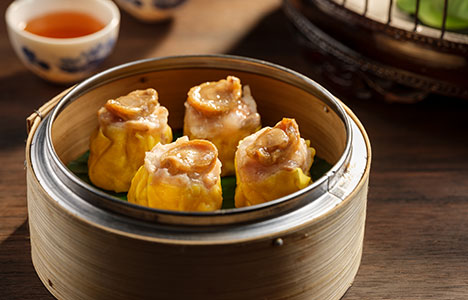
The menu should suit the format of the event, the mix of guests, and the budget available. For larger groups, set menus simplify ordering and keep service consistent. It is also worth balancing the number of courses against the time available, particularly if speeches or presentations are planned mid-event.
Collect dietary requirements from attendees early. Allergies, vegetarian preferences, and spice tolerances are best communicated to the restaurant well in advance. If you are considering Sichuan and Cantonese cuisine, both offer generous group dining options worth exploring.
Step 7: Arrange the Seating Layout
Seating is worth thinking through carefully. A thoughtful arrangement encourages conversation, makes introductions easier, and ensures the right people are positioned together, whether that means clients alongside hosts, or teams grouped by function.
For larger or more formal corporate dinners, assigned seating removes any awkwardness and gives the event a more organised feel. Share the proposed layout with the restaurant in advance so any adjustments can be made before guests arrive.
Step 8: Confirm AV, Setup, and Event Requirements
For events that go beyond a straightforward sit-down dinner, it is worth identifying all practical requirements early. Depending on the programme, you may need some or all of the following:
- Microphones
- Presentation screens
- Projectors
- Wi-Fi
- Power outlets
- Registration tables
- Company signage
- Welcome displays
- Decorations
Not every restaurant for corporate event bookings will have all of these available in-house, and some may require separate arrangements or incur additional charges. Check directly with the restaurant on what is available, what is permitted, and what needs to be arranged independently.
Step 9: Build the Event Programme and Dining Timeline
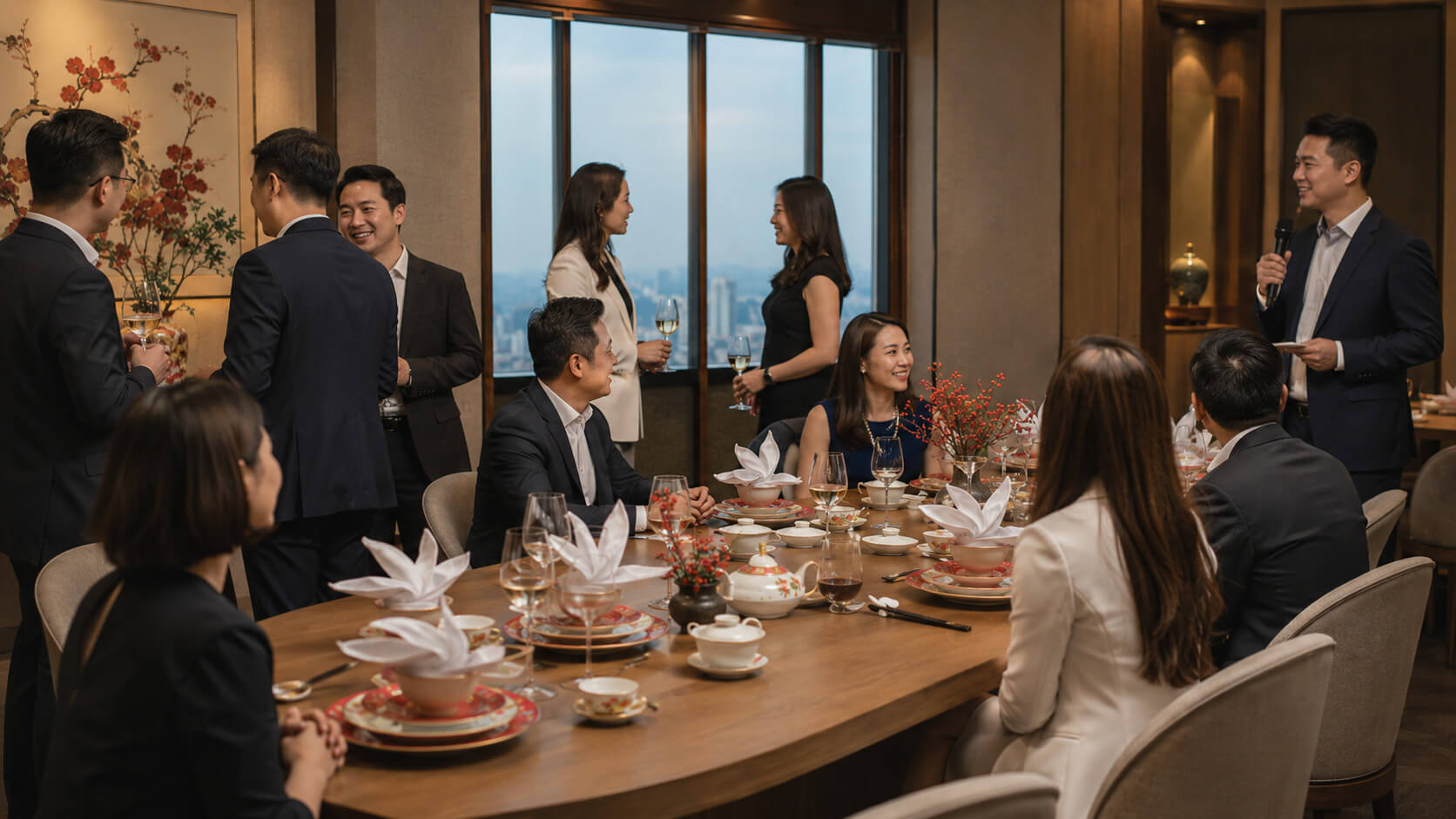
A simple timeline keeps the event on track and ensures the meal service works with the programme rather than against it. Map out the key stages in order:
- Guest arrival
- Welcome remarks
- Meal service
- Speeches or presentations
- Networking or discussion
- Closing remarks
Once the timeline is ready, share it with the restaurant team. Coordinating meal service around speeches and presentations is one of the details that is easy to overlook but makes a real difference to how smoothly the event flows on the day.
Step 10: Finalise the Booking and Event Details
As the event date approaches, run through everything one more time with your chosen restaurant for a corporate event.
Confirm the final guest count by the requested deadline, reconfirm the selected menu and any dietary requests, and align on room layout, seating arrangements, arrival time, equipment requirements, and programme timing.
Keep a written summary of everything that has been agreed. Having it on record gives both sides a clear reference point and reduces the risk of anything being missed or misunderstood on the day.
Step 11: Prepare for the Event Day
Arrive before the guests.
It sounds simple, but an early arrival gives the organiser time to walk through the space, check the seating, confirm signage, decorations, menus, and dietary requests, and make sure any presentation requirements are in place before anyone walks through the door.
Identify the restaurant contact person for the day and make sure they know who to reach on your end if anything needs adjusting. Brief any team members helping with registration, guest introductions, speeches, or presentations so everyone is clear on their role before the event begins.
A Practical Checklist for Corporate Event Organisers
Good planning covers two fronts: what the organiser prepares independently, and what needs to be settled directly with the corporate dining venue. Here is a combined checklist to run through before the event day.
What to prepare on your end
- ☐Define the event purpose
- ☐Estimate the guest count
- ☐Set the event budget
- ☐Check location and accessibility
- ☐Prepare the seating layout
- ☐Prepare the event timeline
- ☐Brief team members on their roles
- ☐Conduct a final check before guests arrive
What to confirm with the restaurant
For anyone hosting corporate and private functions, these are the details worth aligning on directly with the venue team:
- ☐Final guest count and confirmation deadline
- ☐Dining room or private room allocation
- ☐Menu selection and serving sequence
- ☐Dietary requirements
- ☐Arrival and setup time
- ☐Speeches or presentation timings
- ☐AV or technical requirements
- ☐Signage and decoration restrictions
- ☐Deposit and final payment requirements
- ☐Policies regarding last-minute changes
- ☐Main point of contact on the event day
Having one main contact person on both sides keeps communication clear and ensures nothing is missed when it matters most.
Plan a Smooth Corporate Dining Event in Singapore
Every element of a corporate dining event, such as the space, the menu, the seating, the timing, affects how the occasion is experienced by everyone in the room.
Getting these right takes early planning and a restaurant team that knows how to deliver.
At Si Chuan Dou Hua, we have been doing that for over 30 years, across two distinctive venues in the heart of Singapore.
Whether you are hosting an intimate executive dinner at TOP of UOB Plaza or a larger company celebration at PARKROYAL on Beach Road, our team is on hand to help you plan an event that runs exactly as it should.
Enquire about your corporate event to get started.
Other Celebrations
Si Chuan Dou Hua is not just a venue for corporate occasions. For couples planning a wedding lunch, dinner, or reception, we offer dedicated wedding dining options across both locations. Explore what is available as a wedding venue in Singapore.